
2026–2027 Executive Committee

Sara Farahmand, PhD, DABT
President
Dr. Sara Farahmand is a board-certified toxicologist with over 13 years of experience in the Consumer Product Goods industry. She is currently the Director of Toxicology, Product Safety and Regulatory at the Honest Company where she leads a team of toxicologists and regulatory specialists and supports safety and regulatory programs for a diverse portfolio of products including cosmetics, OTCs, supplements, and baby products. She leads and conducts chemical and product human health risk assessments including alternatives assessment, as well as product safety claim substantiation. She has served as the Regulatory Toxicologist/Safety Manager in other multinational companies (including Edgewell Personal Care, Clorox, Procter and Gamble, Avon, and Georgia Pacific). Dr. Farahmand held two postdoctoral fellowship positions—at the Department of Dermatology, University of California, San Francisco, and at the College of Pharmacy, University of Cincinnati, where her research was focused on developing in vitro and in silico models of skin absorption. She received her doctorate in Pharmaceutical Sciences from University of Tehran, Iran.
Dr. Farahmand has served the Dermal Toxicology Specialty Section (DTSS) since 2018 as Councilor, Vice President-Elect, Vice President, and President. During her tenure at the DTSS, she established the webinar program for the Specialty Section and initiated the social media and mentoring committees. Currently, she is the Past President and Councilor of the DTSS. With her leadership role in the clean beauty industry, Dr. Farahmand is passionate about working with the group of brilliant scientists at the SCCT and advancing SCCT’s mission, especially on raising awareness about sustainable chemicals, and promoting toxicological-based research to support new product development and informed substitution, as well as initiating/participating in the Specialty Section’s mentoring program.
Dr. Farahmand lives in the Bay Area with her husband, son, and 3 cats. In her free time, she volunteers at the Northern California chapter of the Association for Women in Science as she enjoys supporting other women scientists achieving their goals. She was the 2022 recipient of the “Sherrie Wilkins Award,” a distinguished professional award from the Association for Women in Science. The award is presented to a woman who promotes career development for women scientists and is committed to mentorship.
Jennifer Tanir, PhD
Vice President
Dr. Jennifer Y. Tanir is a Senior Sustainability Scientist at ToxServices, where she manages programs including GreenScreen Certified®, ChemFORWARD SAFER™, Cradle to Cradle Certified®, ToxServices’s ToxFMD Screened Chemistry® Library, and chemical hazard assessments by GreenScreen® for Safer Chemicals and ChemFORWARD. Jennifer joined ToxServices in 2019 with almost 20 years of green and sustainable chemistry-related experience working in industry (DuPont), non-profit organizations (American Chemical Society’s Green Chemistry Institute and the Health and Environmental Sciences Institute), and consulting (Toward Safer LLC), with a focus on project management and stakeholder collaborations. Jennifer has a PhD in polymer/organic chemistry from the University of North Carolina at Chapel Hill and BS in chemistry from the University of Richmond. She has served in leadership roles in several professional organizations, including the Association for the Advancement of Alternatives Assessment (Secretary/Treasurer), Chemical Society of Washington (President), National Capital Area Chapter of the Society of Toxicology (SOT) (Councilor), and the Sustainable Chemicals through Contemporary Toxicology (SCCT) Specialty Section of SOT (co-founder and inaugural President). Jennifer is the co-author of over 20 publications and has been a member of SOT since 2012. If elected as Vice President-Elect of SCCT, she aims to engage with SOT members, students, and the next generation of leaders working at the interface of toxicology, safer chemicals, and sustainability, to expand the reach of SCCT’s mission and objectives.

Britt McAtee, PhD, DABT
Vice President-Elect
Dr. Britt McAtee is a committed leader at the intersection of toxicology and sustainability, bringing a forward-looking perspective to how the discipline can help meet global environmental and public health goals. She continues to champion the idea that toxicologists are essential partners in advancing the UN Sustainable Development Goals—evaluating hazards, identifying safer alternatives, and integrating considerations such as climate impacts and resource stewardship into decision making. Her vision emphasizes a modern, systems level approach that blends traditional toxicology with innovative strategies for a more sustainable future. As VP-Elect of SCCT, Dr. McAtee would work to expand training, collaboration, and professional development opportunities for toxicologists. Her priorities include strengthening foundational skills such as alternative assessment while also elevating emerging areas critical to sustainability leadership.
Since joining PPG in 2008, Dr. McAtee has advanced to Senior Manager, Global Toxicology and Food Contact Compliance. In this role, she provides expert guidance across industrial, consumer, and food contact markets and leads the development of global testing strategies supporting regulatory compliance in the US, EU, Korea, and China. She chairs internal committees focused on chemical management and risk assessment and works closely with PPG’s Sustainability Team to align toxicology with broader corporate sustainability initiatives. Dr. McAtee began her career at ChemRisk in Pittsburgh, contributing to risk assessment and sustainability projects for a major tire consortium through the World Business Council for Sustainable Development.
She earned her BS in Environmental Sciences from Allegheny College and her PhD in Toxicological Sciences from the Johns Hopkins Bloomberg School of Public Health. Dr. McAtee is a Diplomate of the American Board of Toxicology and completed a Sustainability Certificate at the University of Oxford Saïd Business School.
A member of SOT since 2004, Dr. McAtee has served as President of the Allegheny Erie Regional Chapter and as Councilor for SCCT. She also serves on the MPH Community Advisory Board at Slippery Rock University. Dr. McAtee would be honored to serve as VP Elect of SCCT and continue advancing the integration of toxicology and sustainability across the field.

Cody L. Wilson, PhD, DABT, ATS
Secretary/Treasurer
Dr. Cody Wilson serves as Health Assessment Principal at ExxonMobil Biomedical Sciences, Inc. With over 25 years of leadership experience in product safety, risk assessment, and regulatory affairs, he has held positions across a diverse range of organizations, including the US Navy, Reynolds American, SC Johnson, The Coca-Cola Company, and The Clorox Company. Dr. Wilson earned degrees in Biochemistry and Toxicology from Texas A&M University and is a Diplomate of the American Board of Toxicology and Fellow of the Academy of Toxicological Sciences. He has held various leadership roles in The Toxicology Forum and the Society for Risk Analysis. Dr. Wilson has been a member of SOT since 1996 and has served the SOT as a Member of the Task Force on Chemical and Biological Terrorism Preparedness, Councilor of the Food Safety Specialty Section, and as Councilor of the Lone Star Society of Toxicology Regional Chapter.

Damani Parran, PhD, MBA, DABT
Past President and Councilor
Dr. Damani Parran is a Senior Toxicologist at EHS Support LLC, where he leads the Product Stewardship and Toxicology Services. In this role, he works as part of the core technical team within the Sediment and Risk Assessment (SRA) Service Line and provides environmental and human health toxicology support to projects across multiple service areas and industries. He earned a doctorate in Toxicology from the University of North Carolina at Chapel Hill in 2002 and was a Postdoctoral Research Associate at Virginia Tech from 2002–2005. His graduate and post-graduate research focused on the impact of environmental toxins, including heavy metals and pesticides, on neurodevelopment and neurofunctions. Dr. Parran is also a board-certified toxicologist, earning his Diplomate of the American Board of Toxicology (DABT) certification in 2007. In addition, he earned a Master of Business Administration (MBA) degree from the University of North Carolina at Chapel Hill in 2020 with a concentration in Sustainable Enterprise and Entrepreneurship. In addition to his academic background, Dr. Parran gained industry experience as a Senior Research Scientist in Colgate-Palmolive’s Product Safety group from 2005–2009. He was also the Regional Product Stewardship and Regulatory Affairs Manager at AkzoNobel / Nouryon Chemicals from 2009–2022. As part of this role, he led teams to support AkzoNobel’s / Nouryon’s sustainability goals resulting in top honors in Dow Jones’ Sustainability Index and Gold Level Ecovadis status. Dr. Parran has authored/co-authored numerous publications, including peer-reviewed articles on heavy metal exposure and book chapters on the subjects of pre-clinical toxicology and fetal drug exposure. Dr. Parran has been a member of SOT since 1997 and was previously the Vice President-Elect of the Sustainable Chemicals through Contemporary Toxicology Specialty Section.

Shoba Iyer, PhD
Councilor
Dr. Iyer is the Senior Municipal Toxics Reduction Coordinator at the San Francisco Environment Department (SFE), where she oversees implementation of the City’s Green Purchasing and Integrated Pest Management Programs. She received a doctorate in Environmental Health Sciences/Toxicology from the Johns Hopkins Bloomberg School of Public Health in 2010, and was a Post-Doctoral Research Fellow at the Columbia Mailman School of Public Health from 2010–2012. Dr. Iyer was a Toxicologist with California’s Office of Environmental Health Hazard Assessment from 2012–2022, where she worked on the Biomonitoring California Program and on integrating new approach methodologies into risk assessment practice. Dr. Iyer has served as a reviewer of the National Academies’ report, “The Chemistry of Fires at the Wildland-Urban Interface.” She has authored nine scientific publications, two reports summarizing toxicological research on chemicals of concern for the Biomonitoring California Program, and four chemical-specific fact sheets intended for a non-scientific audience. She has been a member of the SOT since 2004. She has not yet served the SOT through an officer position. After studying molecular mechanisms of chemical toxicity for nearly 20 years, Dr. Iyer’s research interests have shifted upstream towards promoting safer, sustainable alternatives that will prevent the introduction of harmful chemicals into the supply chain and marketplace. Dr. Iyer is also interested in harnessing the power of new approach methodologies to evaluate chemical hazards. That is why she is interested in getting involved with the SCCT Specialty Section, and is interested in running for this position. Dr. Iyer’s current role at SFE involves regular interaction with San Francisco City Department staff, who are end users that stand to benefit from using products containing safer chemical ingredients, and she regularly interacts with vendors from which the City of San Francisco procures goods and services, who are among the business sector we can collaborate with to offer products containing safer chemical ingredients. Because of this, Dr. Iyer’s role offers a pathway for translating the work achieved through SCCT into practice.

Kaley Beins, MPH
Councilor
Kaley Beins is a Solutions Advisor at 3E with expertise in product safety, supply chain transparency, and regulatory compliance. She's especially passionate about alternatives assessment-driven selection of safer chemicals. Previously, Beins has worked on product certification programs in the nonprofit and government spaces. Other past roles include PFAS consensus study development at the National Academies and various toxicology research projects as a contractor for EPA and ATSDR. Beins has an MPH in environmental health sciences from the University of Maryland and a bachelor’s in environmental biology from Georgetown University, and she completed a Fulbright Fellowship in Panama. She has been a member of SOT since 2022 and has volunteered with SCCT in various capacities, including her current role as a Councilor. Beins also serves as the vice president of Sigma Xi's DC Chapter and is a member of SETAC's Association for the Advancement of Alternatives Assessment (A4).
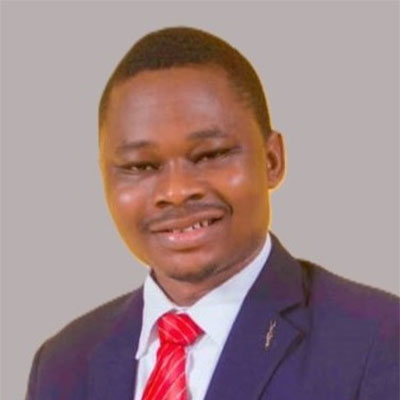
Johnson Oladele
Postdoctoral Representative
Dr. Johnson Oladele is a postdoctoral researcher at Texas A&M University Superfund Research Center and Veterinary Physiology & Pharmacology. With expertise in toxicology, biochemistry, and materials-based mitigation strategies, his research spans environmental chemistry, food safety, and hazard reduction technologies. He serves as guest editor and editorial member of journals published by Frontiers and MDPI. He is a co-editor of two books published by Taylor & Francis. He is the vice president of Texas A&M postdoctoral association. He holds a PhD in Biochemistry from University of Ilorin, Nigeria; a MS in Biochemistry (Molecular Drug Metabolism & Toxicology) from University of Ibadan, Nigeria; and a BS in Biochemistry from Osun State University, Nigeria.
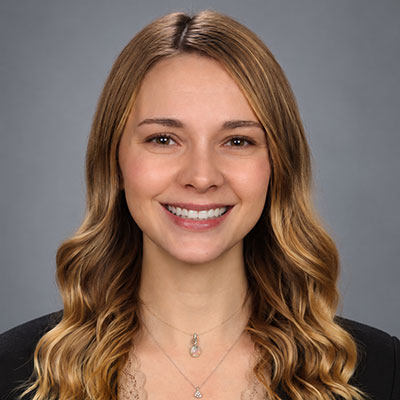
Crystal R. Cevering
Graduate Student Representative
Crystal R. Cevering is a PhD student in the Biomedical Sciences Graduate Program at the University of New Mexico, where she conducts research in Dr. Matthew Campen's laboratory. The Campen Lab investigates the health effects of environmental exposures, with an emphasis on how environmental contaminants contribute to systemic toxicity, inflammation, and disease. Her doctoral research focuses on the effects of dietary micro- and nanoplastic exposure on neuroinflammation and autoimmune disease, using experimental autoimmune encephalomyelitis (EAE), a model of multiple sclerosis. Her work explores how environmental contaminants influence immune responses, central nervous system inflammation, and neurological outcomes. She is particularly interested in applying environmental toxicology research to the safety assessment of cosmetics and consumer products, with a long-term goal of contributing to safer product development and chemical risk assessment.