Abstract Submissions


OPPORTUNITY TO PRESENT YOUR RESEARCH

Why Submit an Abstract?

By presenting at the 2026 SOT Annual Meeting and ToxExpo, you will:

  • Share your research during the leading international forum for toxicologists
  • Engage in open dialogues with some of the 4,000+ attendees for future collaborative opportunities
  • Gain recognition among your peers by having your research published in The Toxicologist, a digital-only publication and an official supplement to Toxicological Sciences, the Society’s journal

Awards Available for Top Abstracts

Many SOT Special Interest Groups and Specialty Sections administer awards for outstanding abstracts. Deadlines vary throughout the year.

Abstract Submissions

The abstract submission site is currently closed. The submission deadline was November 13 at 11:59 pm US ET, UTC -5. The abstract site will reopen for Late-Breaking submissions on December 15.

View Instructions | Watch Tutorials

About Abstract Presentations

Poster Sessions occur Monday through Wednesday during the SOT Annual Meeting and ToxExpo.

Authors are assigned to a specific Poster Session, and on the day of their assigned session, their posters are displayed all day during ToxExpo hours (9:00 am–4:30 pm), allowing attendees to visit the posters at their convenience. Authors will attend their posters only during the assigned Poster Session time frame. Please consult the Poster Sessions FAQs for additional information.

By submitting an abstract and having that abstract accepted, the author is expected and obligated to pay the meeting registration fee and present the abstract during the assigned Poster or Platform Session. Acceptance notification and session timing/instructions will be sent by email in early January, before the early-bird registration deadline.

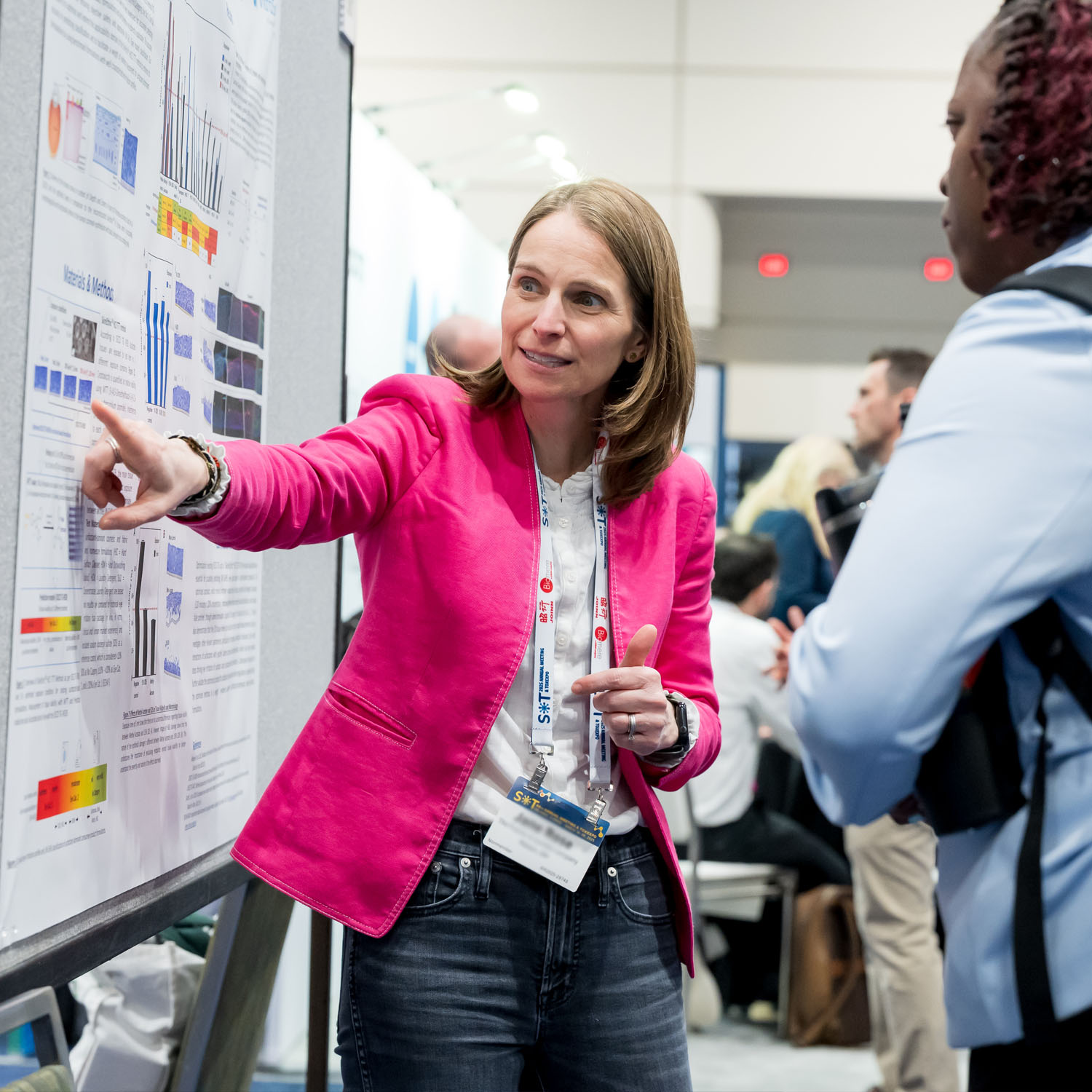
Two individuals stand in front of a poster display. One is standing sideways and gesturing toward the poster.

Crafting and Submitting Your Abstract

The Scientific Program Committee (SPC) reviews each abstract that is submitted and bases acceptance or rejection on specific criteria. Review this section carefully to better understand that criteria and to gain tips for successfully completing an abstract submission.

Required Content and Submission Format

In previous years, the SPC noticed that most rejected abstracts fail to include at least one of four main elements. To help ensure that applicants are including the correct content in their abstracts—especially trainees submitting their first abstract—the SPC updated the application form by breaking the abstract entry into the four required pieces of information. Your abstract length in total—when combining the character count from each required element/box—should be 4,000 characters or less, not including spaces. Please note that your abstract title, the author block (author names, institutions, city, state, country), and the abstract section headers explained below are included in the 4,000 maximum character count.

Sample abstract that contains text appropriate for each section

Background and Purpose

The first few sentences of your abstract will go in the “Background and Purpose” box of the submission form and should describe why you embarked on this work and your overall purpose or objective.

Methods

The next few sentences of your abstract will go in the “Methods” box and will provide a description of how your research was done.

Results

Arguably the most important portion of your abstract is the sentences conveying your results. This means data! If your study is not the kind to produce data, clearly summarize the results and findings. Do not include figures, tables, or chemical structures and avoid nonstandard acronyms.

Conclusions

The final sentences of your abstract should convey the impact or significance of your work to the field of toxicology.

Abstracts for Non-laboratory or Non-field Studies

In the situations of studies that do not describe laboratory or field experiments, such as reports on educational, ethics, legal, or social initiatives, authors should:

  • Describe the research or assessment approach instead of experimental procedures.
  • Summarize the study’s results or findings explicitly.
  • Clearly articulate the implications for stakeholders.

In addition, abstracts describing new initiatives or science policy in the regulatory community must clearly articulate the potential impact on the practice of toxicology and/or risk assessment. Care should be taken to clearly distinguish between statements based on documented facts versus opinions.

Literature surveys or reviews and background materials, a simple overview, or unstructured assessments of a topic, without novel advances in either approach or interpretation of a topic that leads to new conclusions, are not acceptable. However, systematic reviews and/or advances in systematic review methods are acceptable abstract submissions.

Pitfalls to Avoid

Abstract reviewers first ensure that a submitted abstract clearly describes the background and purpose of the work, the methods used, the results obtained, and the conclusions drawn. From there, the reviewer assesses the quality of this information, and abstracts can be rejected for one of these reasons:

General Concerns

  • The abstract raises ethical questions that need to be resolved before it can be accepted.
  • The writing style is insufficient to clearly describe the goals, approach, outcome, and/or significance of the study.
  • The abstract describes/promotes a commercial project without providing substantive scientific data/results.

Scientific Concerns

  • The experimental design and/or interpretation appears to be flawed or biased.
  • The abstract lacks sufficient data or results, or the abstract is a commentary without sufficient data or evidence.
  • The abstract is one of several emanating from a single study and cannot stand alone.
  • The abstract fails to identify the substance(s) being investigated, provide sufficient information on characterization of the substance(s), or provide sufficient information on the numbers of substances being investigated (in screening projects).
  • The abstract represents a review of published literature without a clearly identified novel interpretation or application, nor sufficient new data or knowledge.
  • The work appears fundamentally sound, but it is unclear in its connection and/or relevance to toxicology.

Additional Abstract Development Tips

Additionally, authors should consider the following when developing the abstract:

  • Test compounds utilized in the study should be identified in the abstract as much as possible. In cases where the length of the proper chemical name precludes its use, a manufacturer’s identification number, etc., may be acceptable, provided the structure and chemical identity of the compound are included in the presentation. Abstracts may not be accepted if the authors are unable to disclose the chemical identity of the compound(s) used in the study.
  • It can be challenging to describe results of “big data” studies within the confines of a 4,000-character abstract. Instead, include specific examples of findings to help meet the requirement for description of data.
  • All animal experimentation must be carried out in accordance with the Society’s Guiding Principles in the Use of Animals in Toxicology.
  • All abstracts submitted with human testing require that IRB protocol has been followed and approval obtained. References are not required in the body of the abstract, but the Scientific Program Committee may request authors to provide the IRB protocol followed.

Tutorials for Abstract Submission

Note that the videos reference the submission fee for standard abstract submissions. The submission fee for late-breaking abstracts is $95.

Logging into the Abstract Submission Site

Initiating the Abstract Submission

Entering Presenting Author Information

Enter Co-Author Information

Entering the Abstract Text

Sponsor and Conflict of Interest Steps

Abstract Completion and Payment

Authorship and Sponsorship Requirements

Authors are permitted as the presenting author on only one abstract for the meeting. This includes abstracts for invited speakers in regular SOT sessions (Symposia, Workshops, Roundtables, etc.) There is no restriction on the number of co-authorships. The SOT Scientific Program Committee reserves the right to require consolidation of multiple abstracts submitted from a single study. Each abstract selected for the program must be presented by the presenting author.

SOT membership or sponsorship by an SOT member is required for all abstracts. If an SOT member is unavailable to sponsor the abstract and at least one author is a member of an organization approved for offering sponsorship, the author can indicate a sponsoring organization instead of an SOT member in the Abstract Submission System. By sponsoring the abstract, the sponsor acknowledges that the research has been done according to the SOT Code of Ethics. SOT member sponsorship is limited to Full and Associate members, who may sponsor an unlimited number of abstracts.

All authors involved in the research contained in the abstract must be added to the Author Step in the abstract submission site. SOT HQ cannot insert additional authors to the author block after the abstract receives acceptance.

Two individuals stand in front of a poster display, with other posters and individuals visible in the background. One person is gesturing to the poster while looking at the other person.

The approved sponsoring organizations are:

  • American Academy of Clinical Toxicology
  • American Association for Cancer Research
  • American Association for the Advancement of Science
  • American Association of Immunologists
  • American College of Toxicology
  • American Physiological Society
  • American Society for Biochemistry and Molecular Biology
  • American Society for Clinical Investigation
  • American Society for Investigative Pathology
  • American Society for Pharmacology and Experimental Therapeutics
  • Drug Information Association
  • Endocrine Society
  • Environmental Mutagenesis and Genomics Society
  • EUROTOX
  • International Society for Computational Biology
  • International Society for the Study of Xenobiotics
  • Japanese Society of Toxicology
  • Safety Pharmacology Society
  • Society for Birth Defects Research and Prevention
  • Society for Pediatric Research
  • Society for Redox Biology and Medicine
  • Society for Risk Analysis
  • Society of Environmental Toxicology and Chemistry
  • Society of Toxicologic Pathology

Abstract Scheduling

When abstract acceptances are sent in early January, the notifications contain the assigned Poster or Platform Session, including date and time, for each abstract. Once poster and platform presentations have been scheduled, the complexity of the program planning process prevents any changes in the type of session, time, or location of any presentation. There are no exceptions.

Abstract Withdrawals

Written notification of withdrawal of an abstract must be received by SOT Headquarters by January 16 if the abstract cannot be included in the Annual Meeting materials. Any withdrawal requests made after January 16 will be honored by SOT Headquarters; however, based on the date of the request, the abstract may be included in the materials, and a “Withdrawn by Author” sign will appear on the poster board.

Abstract Submission FAQs

General

  • What is the cost to submit an abstract?

    The one-time abstract submission fee is $70, payable by credit card during the abstract submission process. Undergraduate students should contact Betty Eidemiller to receive a promotional code to save $10; this code is only offered for regular abstract submissions (not late-breaking abstracts). The late-breaking abstract submission fee is $95.

  • What are the topic submission categories used for programming Poster and Platform Sessions?
    • ADME/Toxicokinetics
    • AI and Machine Learning
    • Air Pollution Toxicology
    • Air Pollution: Ozone
    • Air Pollution: Particulate Matter
    • Animal Models
    • Autoimmunity/Hypersensitivity
    • Bioinformatics
    • Biomarkers
    • Carcinogenesis
    • Cardiovascular Toxicology/Hemodynamics
    • Chemical Threats and Bioterrorism
    • Climate Change and Effects
    • Clinical and Translational Toxicology
    • Computational Toxicology and Data Integration
    • Developmental and Juvenile Toxicology
    • Developmental Basis of Adult Disease
    • Drugs of Abuse
    • Ecotoxicology
    • Educating Future Toxicologists and Communicating with the Public
    • Endocrine Toxicology
    • Engineered Nanomaterials
    • Epidemiology and Public Health
    • Epigenetics
    • Ethical, Legal, Social, and Historical Issues
    • Food Safety/Nutrition
    • Genotoxicity/DNA Repair
    • Human Exposure Assessment/Biomonitoring
    • Immunotoxicity
    • Inflammation
    • Kidney
    • Liver: In Vitro
    • Liver: In Vivo
    • Medical Devices
    • Metals
    • Micro- and Nanoplastics
    • Mixtures
    • Molecular Toxicology
    • Natural Disasters
    • Natural Products
    • Neurodegenerative Disease: Parkinson’s Disease
    • Neurotoxicity: Developmental
    • Neurotoxicity: General
    • Neurotoxicity: Metals
    • Neurotoxicity: Neurodegeneration
    • Neurotoxicity: Pesticides
    • New Approach Methods: Computational
    • New Approach Methods: General
    • New Approach Methods: In Vitro
    • Ocular Toxicology
    • Perfluorinated Alkyl Substances (PFAS)
    • Persistent Organic Pollutants (POPs)
    • Pesticides
    • Regulation/Policy
    • Reproductive Toxicology
    • Respiratory Toxicology
    • Risk Assessment
    • Safety Assessment: Non-Pharmaceutical
    • Safety Assessment: Pharmaceutical—Drug Development
    • Safety Assessment: Pharmaceutical—Drug Discovery
    • Skin
    • Skin Sensitization
    • Stem Cell Biology and Toxicology
    • Systems Biology and Toxicology
    • Tobacco, ENDS, and Smoking-Related Toxicology
  • I would like to submit an abstract for an oral presentation. How do I do that?

    If you would like your abstract to be considered for an oral presentation in a Platform Session, on the abstract submission site, do not place a check that corresponds to the statement “If you would only like to be considered for a poster presentation, click NO below.”

  • Will SOT accept late-breaking abstracts?

    There will be a late-breaking abstract submission period December 11, 2025–January 20, 2026. The late-breaking abstract submission fee is $95.

    An important criterion for the late-breaking submission period is that the research must be new and of sufficient scientific importance to merit special consideration after the standard abstract deadline. Abstracts should describe high-impact, original research that could not be completed before the original deadline. All late-breaking abstracts will be presented on Wednesday afternoon during ToxExpo hours.

  • Because I am not an SOT member, how can I submit an abstract for consideration for the SOT Annual Meeting?

    If none of the authors on your abstract is an SOT member, sponsorship by a Full or Associate member is required. By sponsoring the abstract, the sponsor acknowledges that the research has been completed in adherence with the SOT Code of Ethics. If there is no Full or Associate SOT member available, if at least one author is a member of an approved sponsoring organization, you may indicate that in the Abstract Submission System. A full list of approved sponsoring organizations can be found the “Authorship and Sponsorship” section on this web page.

  • Can I, or my company, be invoiced for abstract submission(s)?

    At this time, SOT can only accept payment by credit card. Accepted credit cards include Visa, MasterCard, Discover, and American Express.

  • How can I obtain a receipt for my abstract submission?

    A “Print Receipt” option will appear in the Abstract Submission System once the abstract fee payment has been approved. Receipts also are emailed to the submitting author. Check your Junk or Spam folder if you do not receive an emailed receipt within 30 minutes of submitting an abstract.

  • If I am unable to attend the SOT Annual Meeting, can I receive a refund for my abstract submission?

    Refunds are not offered for any abstracts that have been submitted for the SOT Annual Meeting. The submission fee covers the costs associated with processing and reviewing the abstracts.

Using the Abstract Submission System

  • How much time do I have to enter my abstract in the abstract system?

    The system has a 120-minute time-out feature. After 120 minutes of inactivity, the system will automatically log you out. If this happens, your entries up to that point WILL BE SAVED, and you will be returned to the place where you left off when you log back in. If you get a “Page Cannot Be Displayed” error, you have probably been logged out.

  • How can I get special characters to copy over if I am using a word-processing application to type my abstract?

    This depends on your browser. For most browsers, you may copy and paste your full title and abstract into the appropriate fields in the abstract system from an MS Word document, and the special characters will be preserved in the abstract system. However, if there is hidden coding embedded in the document you are copying from, the special characters may be replaced with a question mark or other symbols when the abstract is loaded into the Abstract Submission System. Be sure to review the summary page of your abstract submission in the system and check the special characters to make sure they are intact.

    If you cannot remove the hidden coding, copy and paste your text to a Notepad document and then copy the text from Notepad to the abstract box in the submission site. Notepad will remove any hidden coding from the text.

  • If I have a conflict of interest to disclose with my abstract, how do I indicate that?

    If you have any conflicts of interest that you need to disclose, please indicate them in the appropriate step in the submission site. If your abstract is accepted, you must include those conflicts on a disclosure slide in your platform presentation or make the disclosure on your poster.

  • I am logged in to the SOT website using my membership information, but the submission site reveals the following message: “Unknown username/password.” Why?

    The submission site does not recognize your SOT membership login information and requires a separate login. However, when you create your Abstract Submission System login, you may use your SOT credentials.

  • If I have to contact SOT Headquarters or the Tech Support team, what information should I have on hand?

    Upon starting the process to submit an abstract, you will be automatically assigned a control ID number. Once you have completed the abstract submission process, please keep a copy of the submission confirmation for your records, including your control ID number. You will need your control ID number to communicate with SOT Headquarters and/or the Tech Support team about a specific abstract.

Poster Session FAQs

  • Will authors be asked to attend their posters all day?

    No. Presenting authors will attend their posters during their assigned Poster Session time frame, but the poster will remain displayed during ToxExpo hours.

    The presenting authors are encouraged to include an email address or other contact information on their poster so attendees who view the poster when the author is not in attendance can contact the authors with questions or other information. Uploading an ePoster provides additional viewing opportunities for attendees.

    The Scientific Program Committee will make every effort to ensure that no Scientific Sessions, including Platform Sessions, related to a specific topic occur during the same time period as the Poster Session for that topic.

  • What if a sudden time conflict arises and I—or any co-author—cannot attend my poster during the designated Poster Session time frame?

    SOT understands that sudden scheduling conflicts can arise. All presenting authors are encouraged to include an email address or other contact information on their poster so attendees who view the poster when the author is not in attendance can contact the authors with questions or other information. Presenting authors also are highly encouraged to upload an ePoster to provide additional viewing opportunities for attendees.

  • How are Poster Session times and locations in the ToxExpo Exhibit Hall assigned by the Scientific Program Committee?

    Considerable effort is made to group similar topic Poster Sessions together in the same color-coded area in the ToxExpo Exhibit Hall. Additionally, the Scientific Program Committee makes every effort to ensure that no Scientific Sessions, including Platform Sessions, related to a specific topic occur during the same time period as the Poster Session(s) for that topic.

  • If authors are not standing by their posters all day, how can photography be monitored?

    SOT policy is to not allow any photography of posters unless permission is expressed by the author. SOT staff and security staff will be enforcing the “no photography” policy on-site to curtail concerns about the all-day display format. “No Photography” signs will be placed in the ToxExpo hall. Attendees who violate the no photography policy risk ejection from the Annual Meeting.

  • What time in the morning should authors mount their posters?

    On Monday, Tuesday, and Wednesday, authors may enter the ToxExpo Exhibit Hall as early as 7:30 am to mount their posters. Poster presenters will be admitted into the ToxExpo Exhibit Hall provided they have (1) an Annual Meeting badge and (2) are carrying a poster or have a receipt to pick up a poster ordered from Shepard—a badge alone will not allow entry into the ToxExpo Exhibit Hall before 9:00 am.

    Authors are asked to remain with their posters or leave the Exhibit Hall after their posters are mounted. Authors wandering the Exhibit Hall prior to 9:00 am will be asked to leave by security.

  • What time in the afternoon should authors remove their posters?

    The poster sessions conclude daily at 4:15 pm. Poster presenters are responsible for removing their posters after 4:15 and before the Exhibit Hall closes at 4:30 pm on the day of their presentation.

  • What if an author forgets to remove the poster in the afternoon?

    Poster presenters are responsible for removing their posters after 4:15 and before the Exhibit Hall closes at 4:30 pm on the day of their presentation.

    Posters left on boards after 4:30 pm on Monday or Tuesday will be removed by event staff and placed on designated retrieval tables throughout the Exhibit Hall. Removed posters may be retrieved during Exhibit Hall hours through 4:30 pm on Wednesday.

    No access to the Exhibit Hall will be available after 4:30 pm on Wednesday.

    Unclaimed posters will be recycled.

  • How will author compliance to the all-day poster policy be monitored?

    Authors are required to have their poster mounted on the board for the full duration of the ToxExpo hours (9:00 am–4:30 pm). Poster Session Chairs will be assigned to assist authors during the Poster Sessions, to note any empty boards, and to check compliance with the all-day poster display requirement.

  • I am presenting a poster in a Poster Session that I am chairing. How should I handle this?

    It is very common for Poster Session Chairs to present a poster in the session that they are chairing. If you are Chair in a Poster Session you are presenting in, you may leave your poster a few times during the Poster Session time to fulfill your Chair duties. If your Poster Session has two Chairs assigned, coordinate with your Co-Chair, to allow your Co-Chair to fulfill the Chair duties while you present your poster.

  • Why do Poster Sessions begin in one cluster of poster boards on the ToxExpo floor and then continue in another cluster several feet away?

    Not all poster board clusters on the ToxExpo floor contain the same number of boards, and not all Poster Sessions contain the same number of posters. Therefore, for large Poster Sessions, there could be a continuation of posters in a particular session in nearby cluster of boards.

    To resolve this issue, the SOT Scientific Program Committee would need to set a minimum and maximum number of poster abstracts accepted per Poster Session so the sessions would contain an equal number of boards within the same cluster, which would limit the number of poster abstracts accepted. The current policy is to assign no more than 40 posters to a Poster Session, while the minimum is five posters for a Poster Session.

    Signs are used throughout the poster board areas to help attendees and poster presenters locate sessions and specific poster presentations.

  • Why are the poster board clusters scattered throughout the ToxExpo Exhibit Hall instead of all together?

    Poster boards are strategically placed throughout the ToxExpo Exhibit Hall to optimize the experience of attendees and exhibitors by creating an ease of movement throughout the hall.