



 ToXchange
SOT FDA Colloquia on Emerging Toxicological Science: Challenges in Food and Ingredient Safety
Toxicogenomics and Its Relevance to Support Hazard Assessment
May 4, 2022 • Webcast • 9:00 AM–1:00 PM Eastern US, UTC-4
Co-Chairs: Stephen Edwards, RTI International; and Xiugong Gao, US FDA CFSAN
The Society of Toxicology in conjunction with the US FDA Center for Food Safety and Applied Nutrition (CFSAN) have partnered to provide this colloquia series. The colloquia present scientific information that is high-quality, cutting-edge, future-oriented toxicological science to provide a well-grounded foundation to inform the work of US FDA employees. These webcasts are open to the public at no charge. These sessions are not a public forum for discussion of toxicology regulatory issues.
Webcast RegistrationToxicogenomics uses genomic technologies to gain mechanistic understanding of biological effects induced by exposure to chemicals and may provide more sensitive biomarkers for the prediction and assessment of their toxicity, thus contributing significantly to toxicology. With recent technological innovations such as next generation sequencing (NGS), toxicogenomics now provides an unprecedented opportunity for improved, animal-free risk assessment of chemicals. Nonetheless, challenges remain in many aspects of toxicogenomics to meet regulatory needs. This colloquium will present the state of the science in toxicogenomics and its relevance to support hazard assessment of chemicals. Recent technological innovations in toxicogenomics are covered, and case studies of toxicogenomics application in risk assessment and toxicity prediction of chemicals related to food and cosmetics are highlighted. The colloquium will also discuss current challenges facing regulatory application and provide perspectives on future directions of toxicogenomics.
| 9:00 AM–9:10 AM | Welcome and Overview |
| 9:10 AM–9:15 AM | Overview and Speaker Introductions |
| 9:15 AM–10:00 AM | Overview of Toxicogenomics and Its Contribution to Toxicological Science |
| 10:00 AM–10:40 AM | High-Throughput Transcriptomics for Chemical Bioactivity Screening and Tiered Hazard Evaluation |
| 10:40 AM–10:50 AM | Break |
| 10:50 AM–11:30 AM | Toxicogenomics to Support Hazard Assessment |
| 11:30 AM–12:10 PM | Application of Toxicogenomics in Toxicity Assessment of Chemicals in Food and Cosmetics |
| 12:10 PM–1:00 PM |
Roundtable Discussion |
SOT events adhere to the Society’s general privacy policy and disclaimers; participants commit to the SOT Code of Conduct.
Please note that the Zoom service used allows audio and other information sent during the session to be recorded. By registering for this session, you automatically consent to such recordings. The recording of the event is posted to the SOT website for public access after the event. If you do not consent to being recorded, discuss your concerns with the host or do not join the session.
For registration questions contact Jim Dailey.
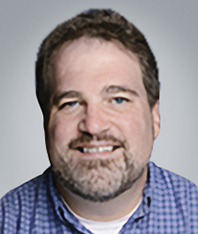
Stephen Edwards, PhD; Colloquium Co-Chair
Stephen Edwards is a Bioinformatics Senior Scientist within the GenOmics, Bioinformatics, and Translational Research Center at RTI International in Research Triangle Park, NC. His current research examines the combined impact of genetic and environmental factors on disease manifestation to better support both precision medicine and public health protection. Dr. Edwards received his bachelor of science in chemistry from the University of North Carolina at Chapel Hill and his doctorate in pharmacology from Vanderbilt University Medical Center. Prior to joining RTI International, Dr. Edwards was a systems biologist at the US Environmental Protection Agency (EPA). In this role, he used computational approaches to describe the mechanisms by which chemicals cause disease in a wide variety of species. This work served as the basis for interpretation of high-throughput toxicity test results allowing thousands of chemicals per week to be screened for toxicity potential. Before joining EPA, Dr. Edwards worked in the pharmaceutical industry where he led a target discovery team focused on novel diabetes targets. The team used biological networks built from genetics and gene expression data to identify potential diabetes targets, which were subsequently nominated for the Merck high throughput screening program.
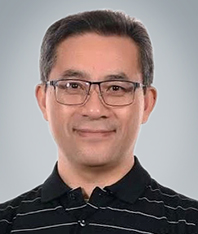
Xiugong Gao, PhD; Colloquium Co-Chair
Xiugong Gao is a Research Biologist in the Center for Food Safety and Applied Nutrition (CFSAN) of the US FDA. He has been using toxicogenomics over the past 10 years to assess the toxicity of chemicals related to food, dietary supplements, and cosmetics in the Division of Toxicology, Office of Applied Research and Safety Assessment (OARSA).
He received his PhD in Biotechnology from Jiangnan University in China, and completed his postdoctoral training at the National Autonomous University of Mexico and at the National Cancer Institute (NCI) of the National Institutes of Health (NIH).

Carole A. Yauk, PhD
Carole Yauk was the lead scientist of the Genomics Laboratory in the Environmental Health Science and Research Bureau at Health Canada for 18 years. She joined the University of Ottawa’s Department of Biology as a professor in September 2020, where she holds the Canada Research Chair in Genomics and the Environment. Her research focuses on the development and implementation of genomic tools for human health risk assessment of environmental exposures, and on improving regulatory assessment of heritable genetic effects. She has over 190 peer-reviewed papers in these areas. She is actively involved in various international committees to advance these fields, including within the Health and Environmental Sciences Institute (HESI) Emerging Systems Toxicology in the Assessment of Risk (eSTAR) and Genetic Toxicology Technical (GTTC) Committees. She has served as a Canadian delegate to the Organisation for Economic Co-operation and Development’s (OECD) Extended Advisory Group for Molecular Screening and Toxicogenomics since 2012. Within the OECD, she is involved with the Adverse Outcome Pathways program and the development of ‘omics reporting frameworks for regulatory submissions. She is Past-President of the Environmental Mutagenesis and Genomics Society, co-chair of the upcoming International Conference on Environmental Mutagens in 2022, and an editorial board member of several journals focused on mutagenesis and genetic toxicology.
Dr. Yauk received a PhD in Biology from McMaster University in Canada. She conducted postdoctoral research at the University of Leicester, where she held a Natural Sciences and Engineering Research Council of Canada postdoctoral fellowship to develop single-molecule PCR technologies to study germ cell mutation and meiotic recombination.
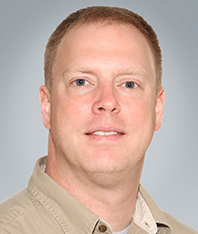
Joshua A. Harrill, PhD
Dr. Harrill works as a cellular and molecular toxicologist with the US Environmental Protection Agency’s Center for Computational Toxicology and Exposure (CCTE). Dr. Harrill’s expertise is in vitro toxicology, specifically the application of transcriptomics, high content imaging (HCI), and other complementary technologies for high-throughput chemical hazard screening, characterization, and risk assessment. Dr. Harrill is a lead investigator for CCTE’s high-throughput transcriptomics and high-throughput phenotypic profiling hazard screening programs that focus on the use of broad-based high-content profiling assays for concentration-response screening of environmental chemicals in human-derived in vitro test systems. Dr. Harrill received his BS in Biochemistry from North Carolina State University and a PhD in Toxicology from the University of North Carolina at Chapel Hill. Dr. Harrill’s graduate and postdoctoral training focused on the application of transcriptomic technologies for evaluating mechanisms of pesticide neurotoxicity and development of HCI-based high-/medium-throughput methods for in vitro developmental neurotoxicity screening. Dr. Harrill then served as a principal investigator at a non-profit research institute researching the role of ligand-activated nuclear receptors in tissue development and liver carcinogenesis using transcriptomic technologies as well as developing novel in vitro models for assessing chemical effects on hepatic stem/progenitor cells. Dr. Harrill also has experience from the private sector in conducting human health risk assessments using US EPA and state-level guidance as well as devising and managing rapid-phase environmental sampling, analysis and data interpretation programs during events involving the release of potentially hazardous chemicals.
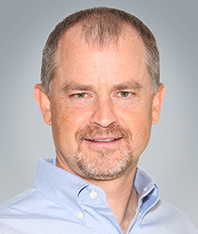
Russell S. Thomas, PhD
Russell Thomas is the director of the Center for Computational Toxicology and Exposure at the US Environmental Protection Agency. The Center is performing solutions-driven research to rapidly evaluate the potential human health and environmental risks due to exposures to environmental stressors and ensure the integrity of the freshwater environment and its capacity to support human well-being. Dr. Thomas has a broad, multidisciplinary background and experience. Dr. Thomas’ formal academic training includes a BA in chemistry from Tabor College, an MS in radiation ecology and health physics from Colorado State University, and a PhD in toxicology also at Colorado State. Following his doctoral studies, Dr. Thomas performed postdoctoral research in molecular biology and genomics at the McArdle Cancer Research Laboratory at the University of Wisconsin. Following his academic training, Dr. Thomas performed bioinformatics and genomics research in the biotechnology sector and gained experience in high-throughput screening and in vitro assay development in the biopharma sector. Prior to coming to the US EPA, Dr. Thomas worked as an investigator and senior manager at the non-profit Hamner Institutes.
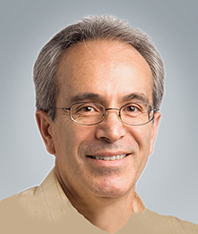
Jorge M. Naciff, PhD
Jorge M. Naciff is a member of the Global Product Stewardship, Central Product Safety organization in The Procter and Gamble Company, where he has been providing human safety support for multiple product categories, mostly in upstream technology in R&D. Also, he has been doing research in the field of animal alternatives for safety testing for over 21 years. He has extensive research experience in molecular biology, developmental and reproductive toxicology, and mechanistic toxicology. The toxicogenomics work he has been doing and directing in the lab has been part of 28 peer reviewed publications and four book chapters, thus far. Since 2019 Jorge has been collaborating with Cosmetics Europe integrating new approach methodologies (NAM) in next generation risk assessment, focusing on the use of toxicogenomics data to assess the biological activity of structurally related and unrelated chemicals, and thus refine the “activity” portion of the SAR paradigm applied to a read-across approach for the safety assessment of chemicals of interest to the cosmetic industry.
Jorge received a PhD from The University of Cincinnati, College of Medicine. Cincinnati, Ohio. He was Adjunct Assistant Professor, University of Cincinnati College of Medicine, Department of Molecular and Cellular Physiology, and after joining P&G he became a Volunteer Assistant Professor of Molecular and Cellular Physiology, Department of Molecular and Cellular Physiology, at the University of Cincinnati, College of Medicine. Cincinnati, Ohio.
- Udayan M. Apte, PhD, DABT, 2021–2022 Colloquium Series Chair, University of Kansas Medical Center, Kansas City, KS
- Stephen W. Edwards, PhD, 2022–2023 Colloquium Series Chair, RTI International, Research Triangle Park, NC
- David C. Dorman, DVM, PhD, DABT, DABVT, ATS, 2022-2023 Colloquium Series Co-chair, North Carolina State University, Raleigh, NC
- Jason L. Aungst, PhD, FDA Liaison, US FDA, College Park, MD
- Omari Bandele, PhD, US FDA, College Park, MD
- Suzanne C. Fitzpatrick, PhD, DABT, US FDA, College Park, MD
- A. Wallace Hayes, PhD, DABT, ERT, ATS, FRSB, FACFE, University of South Florida and Michigan State University, Temple Terrace, FL
- Willie McKinney, PhD, DABT, McKinney Regulatory Science Advisors, LLC, Henrico, VA
- Jason R. Richardson, PhD, DABT, ATS, Florida International University, Miami Beach, FL
- Jeffrey J. Yourick, PhD, DABT, ATS, US FDA, Laurel, MD
- Xiugong Gao, PhD, Colloquium Co-chair, US FDA, Laurel, MD
- Christine Perdan Curran, PhD, Council Contact, Northern Kentucky University, Highland Heights, KY